It is the ultimate founder’s frustration: your Profit and Loss (P&L) statement shows record profitability, yet you are white-knuckling vendor payments to meet payroll. This “profitable but broke” paradox occurs because scaling a business does not automatically solve cash constraints; in fact, rapid growth often accelerates them. If you find yourself drawing on expensive credit lines despite rising sales, the answer is not simply to “sell more,” but to master the mechanics of liquidity.
Here are the Cash Flow Secrets
Stop Looking in the Rearview Mirror (The 13-Week Rule)
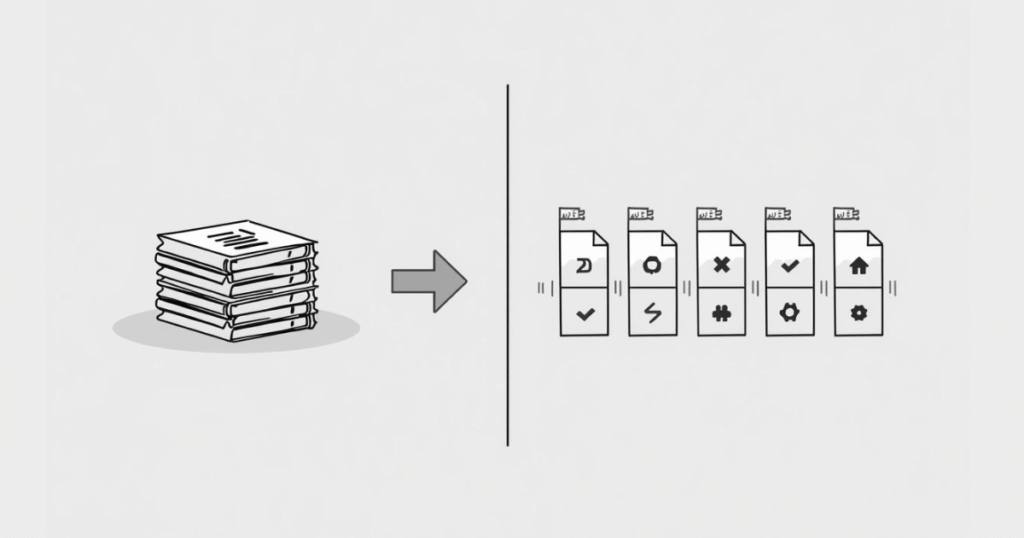
Visibility is the precursor to control, yet most businesses manage their liquidity by looking backward. Reviewing last month’s financial statements tells you what happened, but it offers no protection against the obligations hitting your bank account next Tuesday. At Vireon Insights, we consider the “Rolling 13-Week Cash Forecast” the gold standard for operational finance because it transforms accounting data into a predictive weapon.
By mapping exact expected inflows and outflows week by week, you can identify a potential cash crunch 30 to 60 days before it hits. This foresight provides the lead time necessary to adjust operations, defer non-essential spending, or secure favorable funding. It replaces mid-month panic with the ability to strategically allocate capital based on modelable scenarios.
Reviewing last month’s financial statements tells you what happened, but it cannot protect you from what is coming next week.
You Aren’t a Bank (Closing the Working Capital Gap)
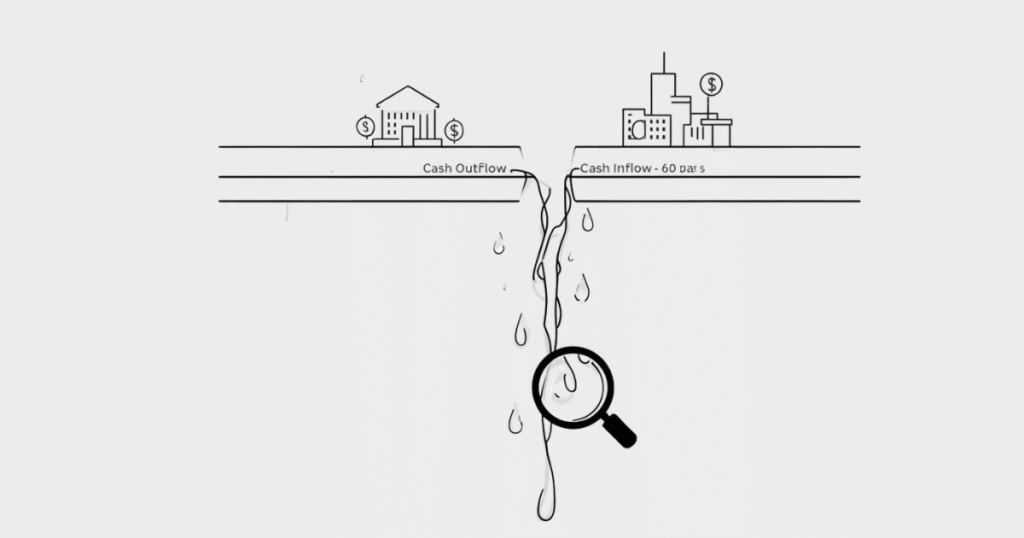
If your clients take 60 days to pay while your suppliers demand payment in 15, your cash is trapped in the gap. In this scenario, your business is effectively acting as an interest-free bank for your customers, a role that becomes increasingly dangerous as you scale.
To improve cash flow, you must aggressively tighten the working capital cycle by pulling specific operational levers.
- Accelerate Receivables: Do not wait for defaults; invoice immediately upon delivery and consider offering “Net 10” discounts (e.g., 2% off for payment within 10 days) to incentivize early settlement.
- Renegotiate Payables: Build stronger vendor relationships to extend your terms. Moving a major supplier from Net-30 to Net-45 can provide an immediate injection of liquidity without increasing debt.
- Liquidate Dead Stock: Excess inventory is literally cash gathering dust on your shelves. Use data-backed demand planning to keep your stock lean and liquidate non-moving items to inject immediate cash back into the business.
Beware of "Operational Creep"
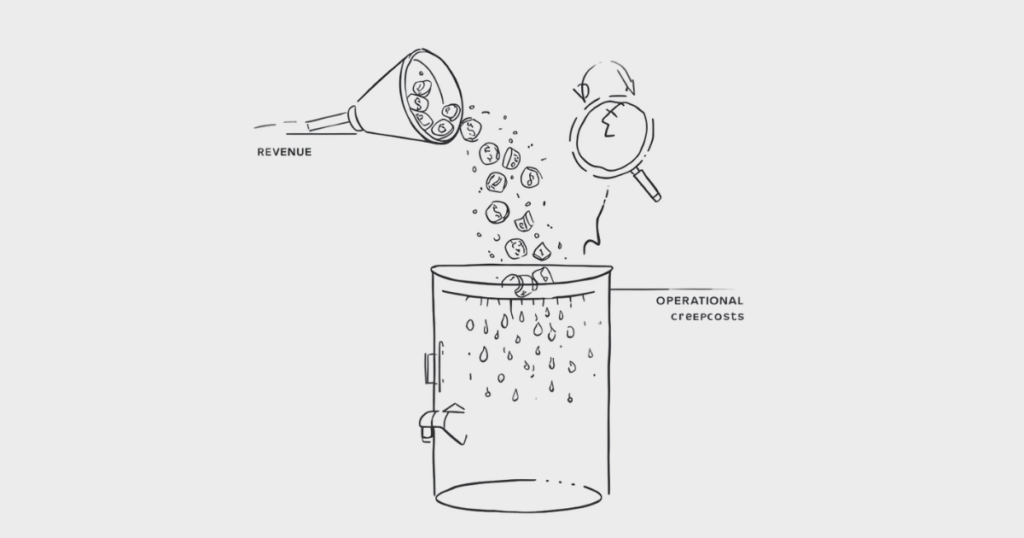
High revenue volume often acts as a mask that hides eroding gross margins. “Operational creep” – the steady, unmonitored rise of material costs, software subscriptions, and indirect overhead – will quietly siphon your cash flow while you are distracted by top-line growth. To maintain control, you must prioritize your “Contribution Margin” over the general “Bottom Line.”
While the bottom line is often skewed by one-time growth investments, the contribution margin reveals the true “unit health” of your products or services. At Vireon Insights, we recommend a margin diagnostics audit to identify which client segments are generating actual cash versus those absorbing resources. This clarity allows you to confidently adjust pricing, restructure unprofitable contracts, and eliminate the structural inefficiencies that drain your bank account.
Match Your Debt to Your Life Cycle
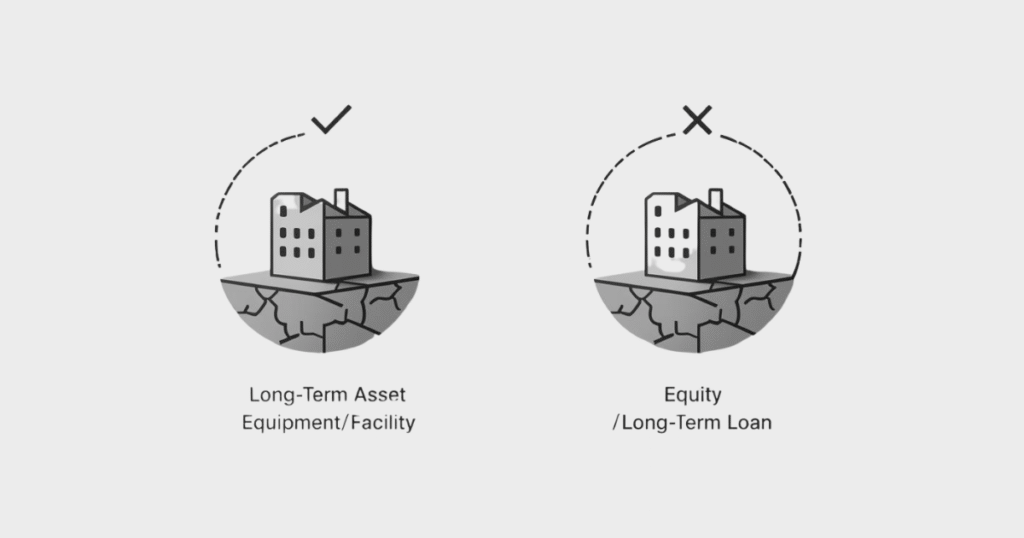
A common strategic error is misaligning your capital structure, such as using short-term, high-interest debt to fund long-term growth projects. This creates unnecessary pressure on daily liquidity and can stall a company’s momentum. Sustainable growth requires a disciplined approach to how you fund different aspects of the business.
The Correct Funding Match:
- Daily Operations: Should be funded exclusively by the cash generated from your working capital cycle.
- Long-Term Investments: Projects like equipment purchases or facility expansions should be funded through appropriate long-term financing or equity to avoid bleeding your operational cash dry.
Conclusion: From Complexity to Strategic Clarity
Solving chronic cash flow problems requires a fundamental shift from basic bookkeeping to strategic financial decision-making. By implementing predictive tools and optimizing your internal cycles, you move from guessing where the leaks are to managing the drivers of your success. As you evaluate your current trajectory, ask yourself: Are you managing your cash flow drivers, or is your growth managing you?
To turn financial complexity into a strategic advantage, consider a Free, 30-Minute Financial Performance Diagnosis Call. At Vireon Insights, we help you uncover hidden margin gaps and build a roadmap to stronger liquidity. You will walk away with actionable insights to unlock your cash flow, whether we work together or not.