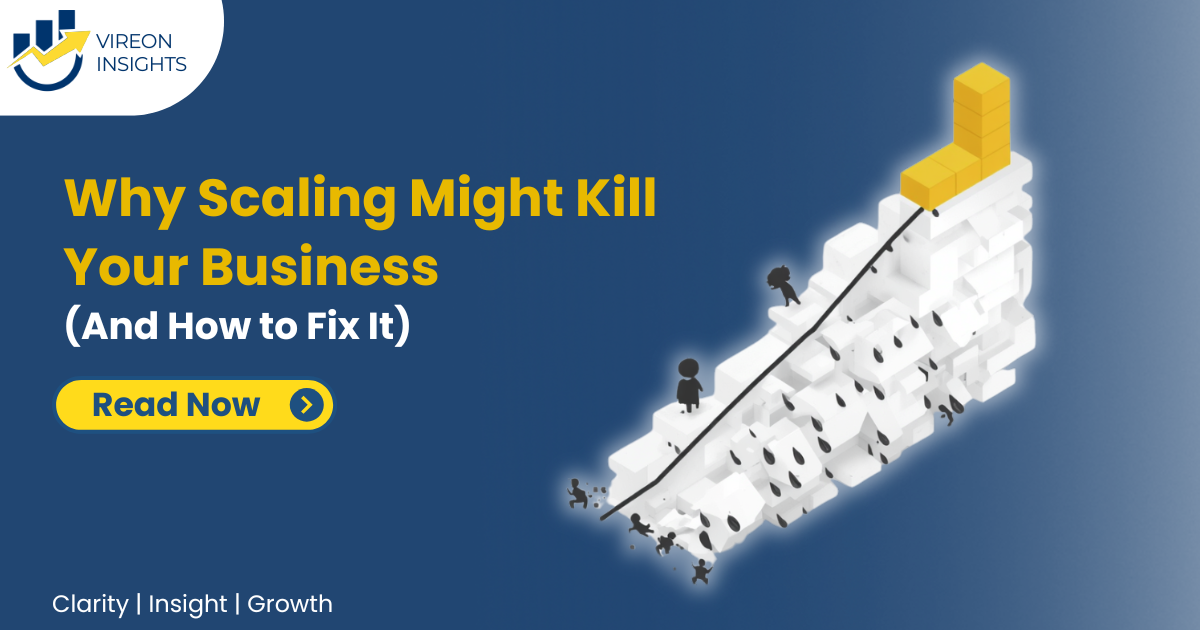
Founders often fall into the trap of believing that rapid growth is the ultimate panacea for every business ailment. The reality I see on the front lines is far more dangerous: aggressive expansion frequently shatters the fragile operational systems that allowed a company to reach its current level. If you attempt to scale a broken economic engine, growth will not save you – it will simply accelerate your cash burn.
Sustainable scaling is rarely a marketing challenge solved by SEO hacks or social media funnels. It is a financial engineering challenge. To grow without bankrupting your daily operations, you must shift your perspective from generic revenue generation to structural financial discipline.
Takeaway 1: Stop Chasing Revenue, Start Hunting for Margin
The pursuit of top-line revenue is a siren song that leads many businesses to disaster. Chasing growth by selling high volumes of low-margin products requires massive operational effort but leaves your bank account empty.
To scale safely, you must prioritize your Contribution Margin – the revenue remaining after all direct variable costs are stripped away. Apply the 80/20 rule with clinical precision: identify the top 20% of your offerings that generate 80% of your actual profit.
Instead of diluting your efforts across low-margin distractions, you must funnel your growth capital, marketing budget, and premium operational capacity exclusively into these high-yield core competencies.
“The most dangerous vanity metric in business is top-line revenue.”
Takeaway 2: The Pruning Paradox (Why Firing Clients Fuels Growth)
It requires immense boardroom courage to accept that the best way to grow is often to shrink. High-maintenance, low-margin customers act as a parasitic drain on your internal resources, consuming the time and energy your team should be investing in your top-tier accounts.
- Free Up Bandwidth: Excising a “bad” client immediately reduces operational friction and restores team morale, removing the hidden costs of constant firefighting.
- Redirect Focus: By eliminating parasitic accounts, you can redirect your attention toward acquiring and serving ideal, highly profitable accounts that provide the necessary capital to fund your scale.
Takeaway 3: Abandon the "Rearview Mirror" for a 13-Week Lens
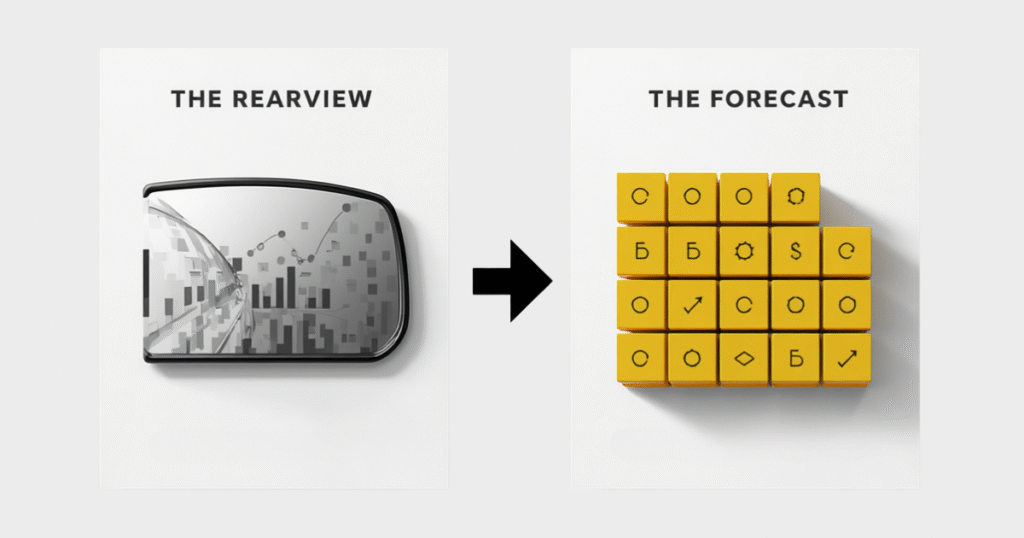
Most small businesses are managed through the “rearview mirror” of historical bookkeeping. Relying on last month’s Profit and Loss (P&L) statement is a dangerous gamble; a P&L is a static document reflecting accounting profit, not liquid cash. It is entirely possible for a business to appear “profitable” on paper while sliding toward bankruptcy.
To navigate growth, you must transition to Predictive Financial Planning & Analysis (FP&A). The primary tool for this is the Rolling 13-Week Cash Flow Forecast. Unlike a static P&L, this is a dynamic, forward-looking model that serves as an early warning system. It allows you to visualize liquidity dips up to 60 days before they occur, replacing mid-month panic with data-backed, strategic decision-making.
Takeaway 4: Patch the "Operational Creep" Before Stepping on the Gas
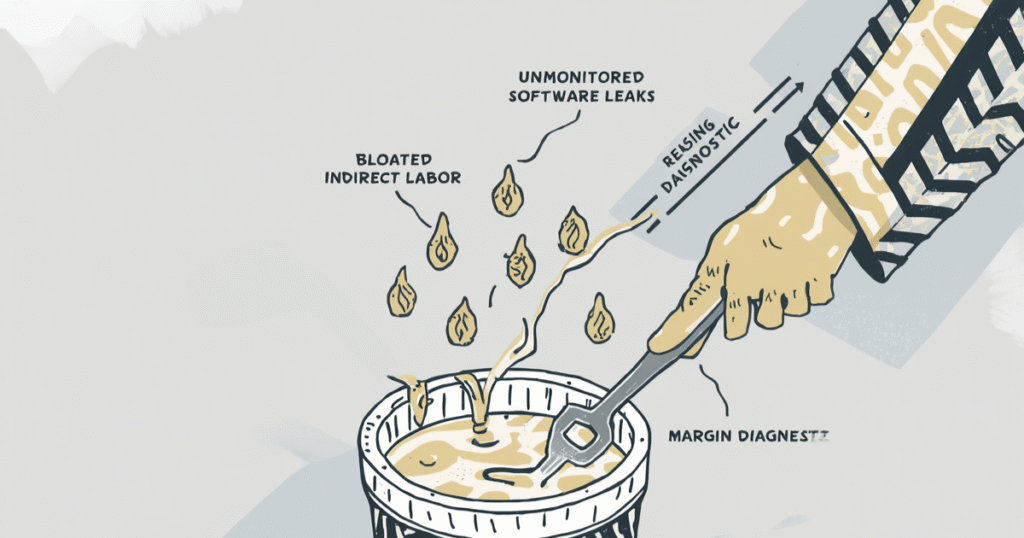
Complexity is the natural byproduct of growth, and it often breeds “operational creep” – the subtle, unmonitored rise in overhead that silently erodes your bottom line. Before you increase your customer acquisition spend, you must conduct a rigorous Margin Diagnostic. This is the essential tool for determining if your pricing model actually covers your fully loaded costs.
Scaling a business with structural leaks is like trying to fill a bucket with holes in the bottom; you must patch the holes before turning up the water pressure. Typical leaks include:
- Unmonitored or redundant software subscriptions.
- Bloated indirect labor costs.
- Rising material costs that haven’t been reflected in customer pricing.
Takeaway 5: Mind the Working Capital Gap
You cannot fund expansion if your cash is trapped in unpaid invoices. The Working Capital Gap is the discrepancy between your supplier payment terms and your client receipt cycle. If you pay suppliers in 15 days but clients take 60 days to pay you, every new sale creates a liquidity drain.
To execute a successful growth strategy, you must tighten this cycle through three specific actions:
- Accelerate Receivables: Invoice immediately upon delivery and offer early payment incentives, such as a “Net 10” discount.
- Renegotiate Payables: Leverage your long-term supplier relationships to secure extended payment terms, aligning your outflows with your inflows.
- Liquidate Dead Stock: Physical inventory is literally cash gathering dust. Keep your inventory lean by utilizing data-backed demand planning to ensure your capital isn’t tied up in unmoving stock.
Takeaway 6: Aligning Your Capital Life Cycle
short-term, daily operational cash flow to fund long-term expansion – such as purchasing equipment or facilities -starves the business of the “oxygen” it needs to survive daily fluctuations.
To avoid a liquidity crisis, ensure your funding source matches the life cycle of the investment:
- Daily Operations: Must be funded exclusively by the cash generated through your working capital cycle.
- Long-term Investments: Should be funded through appropriate long-term financing or equity to preserve your operational cash.
Conclusion: From Reactive Firefighting to Intentional Scaling
Scaling a business is the process of transitioning from reactive firefighting to intentional, structurally sound growth. When you optimize your margins, safeguard your liquidity, and embrace predictive financial models, your business doesn’t just get bigger – it becomes more resilient and significantly more profitable.
If you are working harder than ever but your bank balance remains stagnant, it is time to look under the hood. Have you identified the hidden leaks in your own financial engine?








 Clarity | Insight | Growth