Every year, founders spend weeks building a budget.
Spreadsheets get polished. Numbers get debated. Assumptions get locked.
And yet, six months in, most founders quietly stop trusting it.
Revenue looks fine, but cash feels tight. Costs are “within budget,” yet margins disappoint. Decisions are still made on instinct, not data. The budget exists – but it doesn’t help.
This isn’t because founders are bad at planning.
It’s because most budgets are built for reporting, not decision-making.
In today’s environment – tighter capital, slower demand cycles, higher operating complexity – founders don’t need prettier budgets. They need clarity.
Why Founders Struggle With Budgeting
In our work with growing businesses, a few patterns repeat.
- Budgets become promises instead of tools.
Once a number is approved, teams treat it as a commitment, not a working hypothesis. Adjusting course starts to feel like failure. - Too much focus on outcomes, too little on drivers.
Revenue, profit, and EBITDA are tracked religiously – but the levers behind them remain vague. - Annual thinking in a quarterly reality.
Markets move faster than yearly plans. But budgets are still built as fixed annual documents, not living decision frameworks.
Comfort replaces curiosity. As long as revenue is growing, uncomfortable questions get postponed.
Cash strain or margin erosion shows up late – when options are fewer.
None of this is a finance problem.
It’s a decision design problem.
A Better Way to Think About Budgets
A simple shift helps:
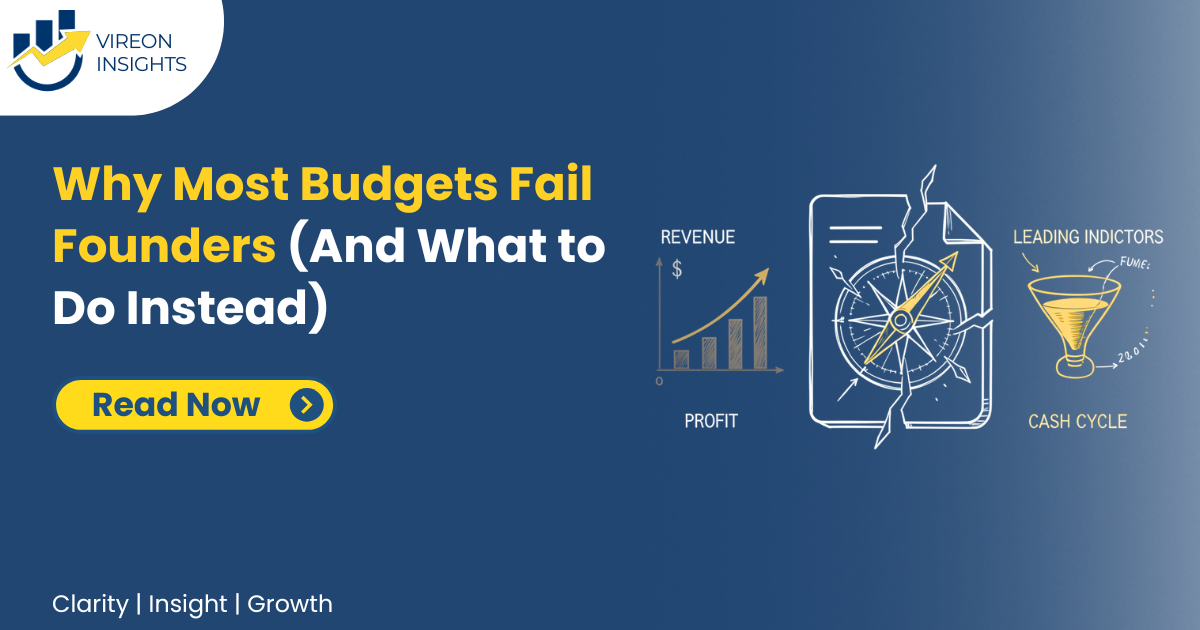
Your budget is not a scorecard. It’s a navigation system.
Think of two types of indicators:
- Lagging indicators: revenue, profit, cash balance
These tell you what already happened. - Leading indicators: conversion rates, utilisation, pricing discipline, cost per unit, working capital cycles
These tell you what is likely to happen.
Most budgets overweight lagging indicators.
Strong budgeting balances both – with more attention on the signals that influence future performance.
The goal isn’t prediction.
The goal is earlier, calmer decisions.
How This Shows Up in Real Businesses
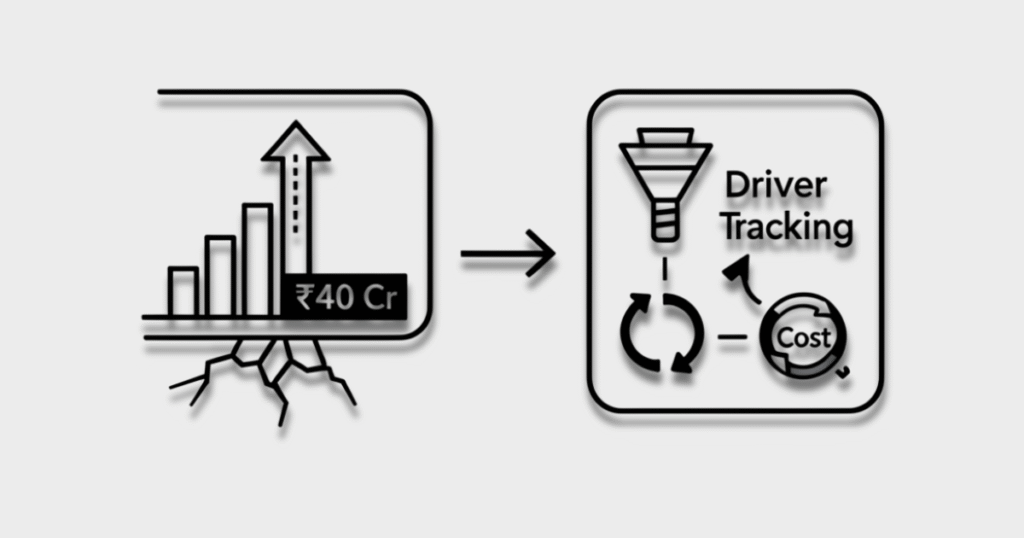
Consider a ₹40 Cr services business.
Revenue is growing 20% year-on-year. On paper, things look fine. But cash is constantly tight. Hiring feels risky. Founders hesitate on growth investments.
What’s missing?
No one is tracking:
- Revenue per billable head
- Client concentration risk
- Billing delays by customer segment
Now contrast that with a founder who watches:
- Pipeline quality, not just size
- Cost per delivery unit
- Cash conversion cycle monthly
The second founder doesn’t panic when revenue dips for a month – because they understand why.
Decisions are measured, not reactive.
Same business scale.
Very different outcomes.
What Founders Should Focus On
Instead of asking, “Did we hit the budget?”
Ask:
- Which drivers moved this month?
- What decisions do these numbers enable?
- Where are we trading off growth, cash, and profitability – consciously or accidentally?
Revenue and profit matter. They are not vanity metrics.
But taking comfort in them without understanding the drivers behind them is risky.
A practical rule:
- Monitor lagging metrics
- Manage leading metrics
- Decide using the relationship between the two
You don’t need 50 KPIs.
You need a handful that explain why performance is changing.
Leadership & Mindset Considerations
Budgets fail faster when leaders treat them as control tools instead of learning tools.
Founders set the tone by:
- Asking better questions, not demanding better numbers
- Encouraging early signals, even when uncomfortable
- Separating accountability from blame
When leadership rewards clarity over optimism, teams surface issues earlier. Decisions improve. Stress reduces.
Strong financial performance isn’t built on perfect numbers.
It’s built on numbers leaders trust enough to act on.
From Information to Better Decisions
Most founders don’t need more data.
They need clearer signals.
A budget should reduce anxiety, not add to it.
It should help founders choose when to push, when to pause, and when to change course.
If this perspective resonates, lets connect!