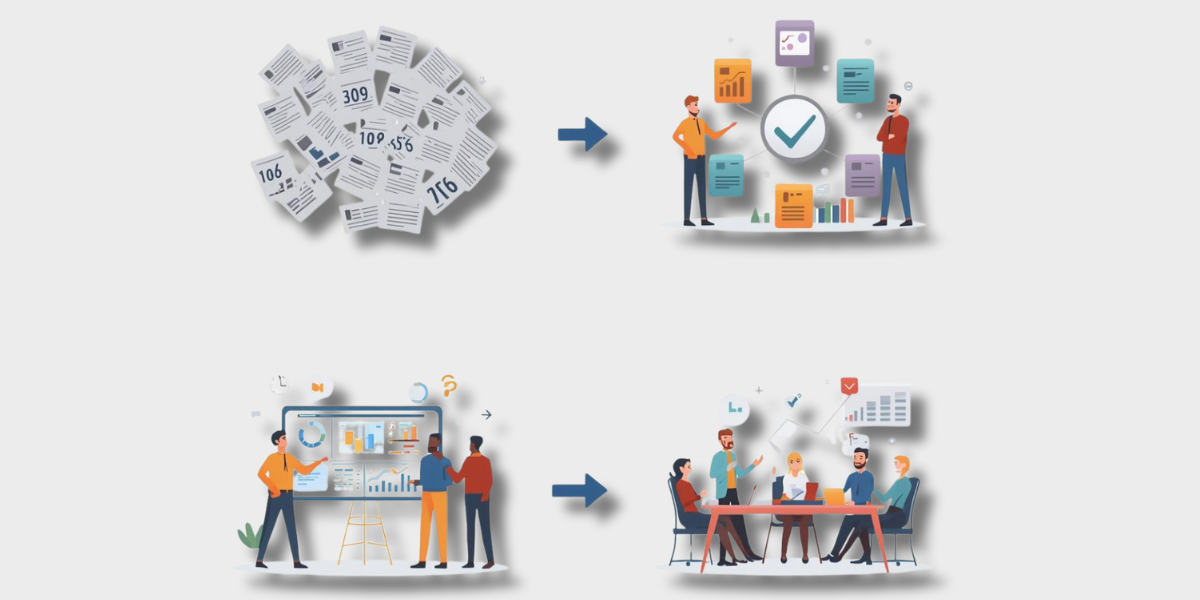
Most mid-market companies don’t have a data problem. They have a “too much, in too many places” problem.
ERP, CRM, billing, spreadsheets, bank portals, point tools -each holds a slice of the truth. In leadership reviews, that fragmentation shows up as three different numbers for the same metric and a 15minute debate on which one to trust. By the time you align on a number, confidence is already gone.
The instinctive response is usually, “We need a better BI tool.” In practice, a new layer on top of bad foundations just gives you prettier confusion. For a 200–500 person company, the finance stack doesn’t need to be sophisticated. It needs to be deliberate and boringly consistent.
What “single source of truth” really means
Single source of truth is not “all data in one system.” It is a clear decision about:
- Which system owns which data.
- Where leadership goes for the number of record on any given metric.
- Who is accountable when something looks off.
Without those choices, every tool becomes “a source of truth,” which means none of them are.
For midmarket finance teams, a minimum viable stack looks like this:
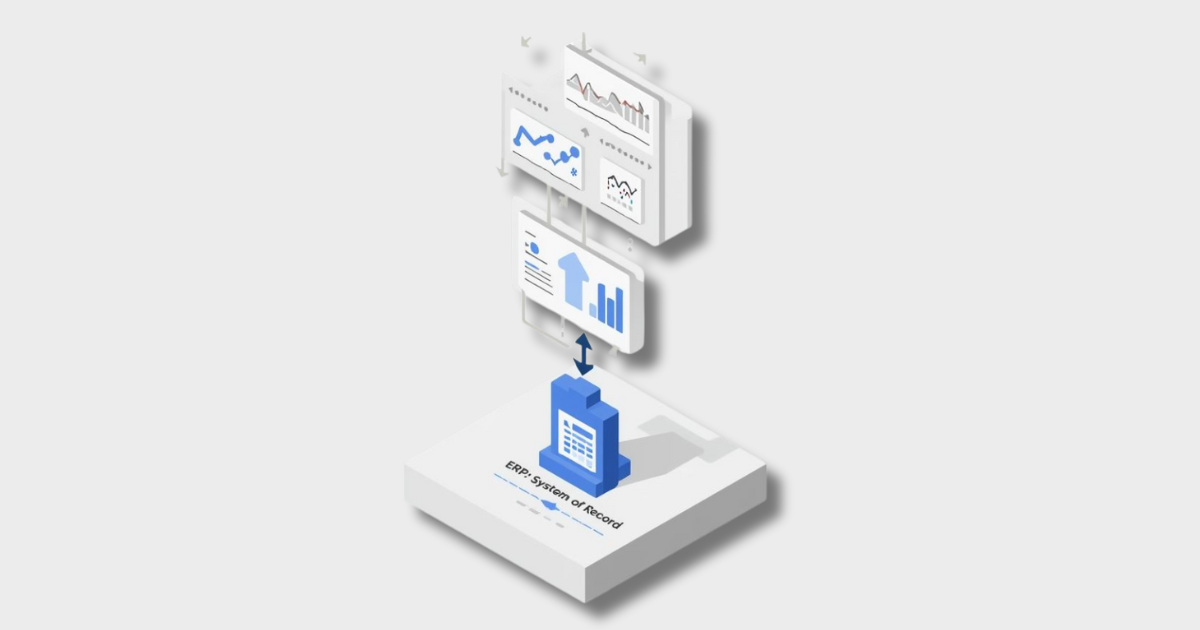
1. System of record (ERP / accounting)
- General ledger, subledgers, AP/AR, fixed assets.
- This is the only place that defines booked revenue, cost, and actuals.
- Sales tools or spreadsheets may run ahead, but the ERP is final.
2. Planning and modelling layer (often still Excel)
- Driverbased models for revenue, headcount, opex, capex, cash.
- Owned by FP&A, built in partnership with business leaders.
- Version control and documentation matter more than fancy technology.
3. Reporting / analytics layer
- A small set of standard views: P&L, cash, key drivers, cohort or unit economics.
- Same definitions used in board packs, management meetings, and team dashboards.
- Data might come from several systems, but consumption happens through one route everyone recognises.
Everything beyond this – advanced BI, automation, AI forecasting – is an optimisation, not the foundation.
How to move from chaos to minimum stack
If your current reality is multiple spreadsheets and conflicting reports, you don’t fix it with a bigbang implementation. You fix it with sequencing.
Step 1: Decide “source of record” per area
List your core domains: revenue, costs, headcount, pipeline, product usage, cash. For each, answer: “In this company, which system wins if numbers conflict?” Document that. Communicate it widely.
Step 2: Standardise definitions
Agree what “ARR”, “active customer”, “gross margin”, or “churn” actually mean. Most midmarket confusion comes from definitional drift, not calculation errors. Lock the definitions in a short, plainlanguage “metrics handbook” owned by finance.
Step 3: Build one simple finance dashboard first
Before you roll out companywide BI, design one consistent view for the leadership team:
- Last month’s actuals vs plan
- Cash position and runway
- 3–5 operational drivers that really move the business
Update this reliably for 3–6 months. Quality and timeliness are more important than sophistication.
Step 4: Reduce the number of “shadow systems”
Shadow systems are spreadsheets or tools teams rely on because they don’t trust the official stack. Don’t ban them immediately. Understand why they exist. Then either:
- Fold their logic into the official stack, or
- Make it clear they’re temporary and timebound.
The goal isn’t perfection. It’s steadily reducing the number of places people go for answers.
Questions to test your current stack
A simple midmarket selfaudit:
- Can your CEO, sales lead, and FP&A lead all pull the same revenue and margin number from the same place?
- Can you refresh core dashboards weekly without heroics at monthend?
- When numbers are challenged, do you argue about decisions, or about which spreadsheet is “right”?
If the honest answer is “no” to two or more, your next step isn’t another tool evaluation. It’s designing a minimum finance stack your leadership team can actually run the business on.
That’s where leverage lives for midmarket CFOs and founders: fewer systems, clearer ownership, and one place where the truth lives – so decisions can move at the same speed as the business.